Posts Categorized: Homeowner Tips

Smart Ways to Cut Costs on Your Internet and TV Setup

When our clients move to a new home, the overwhelming majority seek to set up one thing first: TV and internet. But simply calling your old provider and switching over your service is often not the best or most cost-effective option. How much were you paying for your old package, and is it the best deal available? Move Concierge’s product expert, Paul Lambert, answers the most common questions new movers have when setting up their TV and internet.

Q: I’ve always assumed that selecting a provider that could give me both TV and internet would get me the best deal. Is that really the case?

Bundling TV and internet isn’t always the best option. While it may seem convenient, stand-alone TV services like YouTube TV or DIRECTV often offer better value. Currently, those two providers are the most popular, but there are other options worth considering. Spectrum offers a unique $10 package for national channels with a two-year price lock. While Xfinity has stripped-down packages with limited channels for $10-15, that often exclude popular networks like Discovery, History, and national news. 

The most important thing to note is what’s easiest isn’t always best. It may be more convenient to bundle your TV and internet, but most of the time, it’s not the best choice from a price or package standpoint.

Q: What’s the biggest factor someone should consider when selecting a provider?

It really comes down to which channels you want. For cable TV, basic packages typically cost between $50 and $75 per month. Xfinity offers some solid packages, but they may not include all the channels you are looking for. 

Sports fans should note that sports packages can range from $110 to $ 140. Premium packages with full channel lineups can cost up to $160 per month. Adding premium channels like HBO, Cinemax, Starz, and Showtime can push costs up to $190 monthly.

Q: What about internet providers? If you’re not bundling with TV, what do people need to know about stand-alone internet options?

Fiber internet is the future of internet. It’s the best option for most people because of its speed and reliability. 

While 5G internet is less expensive, around $30 per month when bundled with cellular service, it’s not reliable or fast enough for people working from home or families with kids using the network for school or gaming. For most homes, especially those with multiple devices, smart home setups, or security cameras, one-gigabit speeds are the way to go. 

One-gigabit internet typically starts around $70 per month, though some providers, like Frontier, offer it for $50 as a permanent price. Rates vary significantly, as some providers charge $70, while others go up to $130 for the same speed. 

Q: Are hidden fees something that consumers should watch out for?

Yes, hidden fees are very common. Many companies don’t disclose them until the final checkout page, when most people just continue on despite the higher price. 

For example, DIRECTV charges a regional sports fee that varies by region. Their website lists $8 with an asterisk, noting it may be higher, but for about 85% of the country it’s actually $18. 

At Move Concierge, when we present quotes to customers, we include all hidden fees – everything that would normally be buried in an asterisk – so people know exactly what they’ll be paying and can compare providers fairly.

One good thing is that most companies now use a self-installation process, something that became standard during COVID. This cuts installation costs from around $150 for an in-home visit to about $30 for shipping equipment. Self-installation is generally straightforward, involving scanning a QR code, creating an account, and connecting a few cords. 

If customers can’t complete the setup, providers will often charge extra for technician assistance. That said, most providers do everything they can over the phone first, as sending a technician is costly for them.

Q: Anything else people should know?

Every internet and TV company raises their prices eventually, so don’t be afraid to re-shop your services every two to three years. Switching providers allows you to take advantage of new customer pricing, which often results in a better deal. 

Moving is the perfect time to reset accounts rather than transferring an existing service. While switching providers may be a temporary inconvenience, the savings will add up – sometimes as much as $300 a year. For many people, it’s absolutely worth it.


The Ultimate Guide for Renters Buying Their First Home

By Gabe Abshire, CEO of Move Concierge

You’ve been renting a place ever since you moved out of Mom and Dad’s. It started with the first apartment in college, small and perpetually occupied by your multiple roommates, but representative of that first taste of freedom you’ve been craving for years. 

Then comes apartment number two, still small but with fewer roommates, maybe a fifth-floor walkup but close to easy transit. And then finally – finally! – you’ve scraped up enough money to buy your very own place. 

Now what? There are so many things to consider when buying your very first home, especially when you’ve been a long-term renter and are used to having a landlord handle the basics of property management. 

Renters moving into their first home should consider these key steps:

Before Moving In

  • Final Walkthrough: Conduct a thorough walkthrough with your real estate agent to ensure all agreed-upon repairs have been completed and the property is in the condition specified in the contract.
  • Utilities Transfer/Setup: Contact utility providers (electricity, water, gas, internet, trash) to transfer existing accounts or set up new ones in your name, effective on your move-in date. Companies like Move Concierge can help take all of this management off your plate and provide you with a moving concierge to do the work so you can focus on your move.
  • Home Insurance: Confirm your homeowner’s insurance policy is active and covers the property from the closing date.
  • Change of Address: Update your mailing address with the USPS and notify relevant institutions (banks, credit card companies, subscriptions, employers) of your new address.
  • Key Collection: Arrange to pick up all keys, garage door openers, and any alarm codes from the seller or their agent.

Upon Moving In

  • Change Locks: For security, it’s highly recommended to change all exterior door locks immediately.
  • Locate Essentials: Find the main water shut-off valve, electrical breaker box, and gas shut-off valve. Familiarize yourself with their locations in case of an emergency.
  • Check Smoke/Carbon Monoxide Detectors: Ensure all smoke and carbon monoxide detectors are present and functioning, replacing batteries if necessary.
  • Initial Cleaning: Even if the home was professionally cleaned, a personal deep clean before unpacking can make the space feel truly yours.
  • Document Condition: Take photos or videos of the home’s condition, especially any pre-existing damage, for your records. This can be useful for future reference or insurance claims.
  • Set Up Security System: If the home has a security system, activate and test it. If not, consider installing one.
  • Review Appliance Manuals: Gather and review manuals for any appliances that came with the home.

Making the leap from renting to homeownership is a major life milestone, but it’s not without its challenges. At Move Concierge, we’re here to help alleviate the stress involved so you can revel in the joys that come with homeownership.

5 Questions to Ask Before You Budget Your Next Move

Many people face a dilemma when moving, especially when deciding whether to hire help or attempt to do it themselves. We asked Move Concierge CEO, Gabe Abshire, the five most commonly asked questions we at Move Concierge get asked when people are thinking of moving. Here are his answers:

1. What are the main costs people should expect when moving to a new home?

The most significant cost is getting your new home move-in ready. Many people are busy packing up their old place that they neglect the to-do list for their new one. Do you know if the new house has adequate security? Do you need to have the locks changed? Have you researched internet and cable providers? Moving is best described as a massive disruption and distraction, so unexpected costs can easily creep up.

Here is a partial list of the secret costs to moving:

  • Appliance replacements
  • Fireplace Inspection or Cleaning
  • Window treatments
  • Gutter cleaning
  • HVAC servicing
  • Pest control 

2. What are some common expenses that people often forget to plan for when moving?

I think people sometimes expect their new home to be perfectly move-in ready, but that’s not often the case. Sometimes a deep clean completed by a professional crew is needed to make the space feel fresh and ready for all your belongings. This includes the HVAC system. When was the last time the system was serviced and the air filter replaced? I find that getting these things squared away prior to the move-in date can go a long way to making the transition smoother.

3. Are do-it-yourself moves always less expensive than hiring a professional moving company, or are there hidden costs that people often overlook?

Do-it-yourself moves may save money, but it won’t save you time. That’s the most considerable hidden cost: sifting through the laundry list of gas companies, interest providers, and trying to find the best home services on your own, often in a new town. It’s overwhelming, to say the least. 

4. Are people finding moving more challenging compared to five to ten years ago? Why or why not?

Moving can be much more challenging if you go at it alone, partly because of the additional service options available to consumers. Ten years ago, you didn’t have several competing Smart Home Security firms or utility providers to choose from. Today, numerous websites claim to offer the best deals on moving services, which creates a lot more white noise for people trying to move on their own without an expert service provider to help them.

5. What advice can you share to help reduce moving costs without increasing stress or risk?

The best thing to do is to find a home moving service that provides a one-on-one consultation with an expert. These experts should be able to clearly map out all items in a moving checklist and complete it quickly. Ensure you work with a service that offers a selection of providers to set up in your home. Many services only give you one or two choices of providers.

How do I get the most out of a home warranty?

By Gabe Abshire, CEO of Move Concierge

So here it is. It’s 100 degrees out and your HVAC unit is completely shot. The technician comes out and wants to replace, not repair, the whole thing, which isn’t covered by your home warranty. Now, you are faced with getting competing quotes from different contractors despite spending money on your home warranty.

To add to this you still have to get one kid to soccer and the other to ballet, prep for the in-laws visiting next week and get a million things done for work. Meanwhile, two techs came out to look at the AC and charged $60 for each visit. Now, the insurance company has come up with some phony response, saying whatever caused the problem wasn’t part of the plan. What a waste of money on the home warranty.

How could things turn out better?

Tips for Getting the Most Out of a Home Warranty:

  • Work with your personal concierge to find a reputable home warranty provider.

At Move Concierge, choice is our priority. Our team has done the research and is able to provide you with a complete list of trusted warranty providers in your area who can offer the coverage you need. Our goal is to arm our customers with options so they can decide which service provider can best meet their needs.

  • Choose the right home warranty provider. 

Review the research we’ve done and compare different providers to find one that offers the coverage and service you need at a price you can afford. A checklist may help! What appliances and systems do you want to be covered? How much are you willing to pay for a warranty?

  • Read your policy carefully. 

Understand what is and is not covered by your warranty and any exclusions or limitations. Also, consider pricing, servicing fees, and coverage limits.

  • Be prepared to provide documentation. 

When you file a claim, you may be asked to provide documentation, such as proof of purchase for the appliance or system, as well as photos or videos of the damage. For instance, if your AC was damaged two weeks after a vendor’s maintenance check gave it a clean bill of health, the warranty company might try to deny coverage by claiming a lack of maintenance. In this case, the maintenance receipt and diagnosis could serve as proof to counter their claim and ensure you receive the service you’re entitled to.

  • Do not do the work yourself. 

In the unfortunate event of a system or appliance failure, where subsequent damage may or may not occur, you mustn’t attempt to repair the issue yourself. Furthermore, you must not engage the services of a professional repair person or company without first obtaining express permission from the relevant parties. Failure to adhere to these guidelines could nullify your warranty and leave you liable for the full cost of repairs.

Move Concierge removes the hassle of digging through endless options on your own. Instead of combing through multiple websites and calls, we line up the best home warranty providers in a comparison. That way you can confidently choose the plan that checks all the boxes – coverage, service and cost – without the extra stress. 

Little-Known Hacks to Make Your Move Easier

9 quick secrets our experts swear by

By Jason Lindwall, President of Move Concierge

Moving can be overwhelming, which is why home service companies such as Move Concierge are in such high demand. When it comes to moving, we are experts. We’ve got hacks that extend beyond the typical advice — such as labeling boxes or packing room by room. Here are some underrated tips that seasoned Move Concierge partners swear by.

1. Color-Code Instead of Just Labeling

Labeling boxes is a given, but color-coding adds a visual shortcut that can save time and confusion. Assign a color to each room (e.g., blue for kitchen, green for bedroom), and put colored tape or stickers on each box. On moving day, a quick glance tells movers where each box belongs without needing to read every label. And don’t forget to color-code the top and a side of the box to make it easier to identify stacked boxes.

2. Photograph Your Electronics Setup

Before you disconnect your TV, Wi-Fi router, or computer setup, take a photo of the cable configurations. This helps immensely when you’re trying to remember which plugs go where, especially if you’re not tech-savvy or had your entertainment system installed by a professional.

3. Pack an ‘Open-First’ Box — and Label It Loudly

Most people remember to pack an overnight bag with essentials, but a clearly marked “Open-First” box with things like scissors, trash bags, toilet paper, paper towels, chargers, snacks, and a basic toolkit can be a lifesaver during those chaotic first 24 hours.

4. Secure Dresser Drawers Instead of Emptying Them

For lightweight items like clothing or linens, leave them in their drawers and secure the entire drawer with plastic wrap or moving tape. This saves packing time and reduces the number of boxes. Just be sure the furniture is sturdy enough to handle the move this way!

5. Use Soft Items as Packing Material

Instead of wasting money on bubble wrap, use towels, socks, and clothing to pad fragile items. It’s eco-friendly and maximizes every inch of your packing space.

6. Take Measurements Before Moving

Many people forget to measure doorways, elevators, and staircases in both locations. Your oversized sofa might fit into your old living room, but not through your new apartment’s stairwell. If you are relocating to a distant location, consider asking your real estate agent to handle this for you.

7. Create a Digital Moving Folder

Keep digital copies of lease agreements, moving company contracts, utility setup confirmations, and receipts in a single cloud-based folder (e.g., Google Drive, Dropbox). If you need something on moving day, you won’t be rummaging through boxes looking for paperwork.

8. Pack Your Closet Like a Pro

Instead of removing clothes from hangers, use a large garbage bag to group and wrap sections of your closet. Just tie the bag around the hangers — unpacking becomes as simple as hanging the bundles back up.

9. Schedule Utilities Early — and Double-Confirm

Waiting until the last minute to set up water, power, or internet can leave you without essential services. Schedule everything well in advance, and confirm at least a few days before your move to avoid any surprises. Or, make life even easier and connect with Move Concierge to handle the set-up of necessities like cable and utilities. Your personal concierge will present you with the best possible options at the best possible prices, and they’ll oversee the process through to completion, allowing you to focus on setting up your new home.

With these lesser-known moving hacks, you can reduce stress, save time, and start enjoying your new space sooner.

How to Choose the Best Smart Home Alarm System

In today’s world, home security is more important than ever. And, with a spate of high-profile burglaries, it is clear that even celebrities are not safe, and these criminals know no boundaries. Robbers even targeted the home of high-profile couple Keith Urban and Nicole Kidman on Valentine’s Day. Valentine’s Day! 

Thankfully, household staff working for the couple scared away the would-be perpetrators. But what happens when your home gets targeted and no one is home? It can happen to anyone who doesn’t take the necessary precautions. 

A home gets broken into every 13 seconds in the United States. And it usually happens in the middle of the day when everyone is away at work and school. Robbers often brazenly go straight through your front door if they see that there isn’t a Smart Home Alarm System at the property.

But keep in mind a great Smart Home Alarm System doesn’t just protect the outside of the home, but also monitors the inside in case there is a fire (smoke and heat sensors) or medical emergency (panic buttons) at the premises. These systems can also control the thermostats, doors and lights. Imagine being on vacation for a few weeks and every night the lights come on. No one would suspect that you are gone!

So, how do you choose the best home security system for your needs? Move Concierge offers the following checklist to help you answer that question and get started. If you’d like to simplify the process, a Move Concierge team member can efficiently handle the setup of your Smart Home Security for you. 

Deterrents

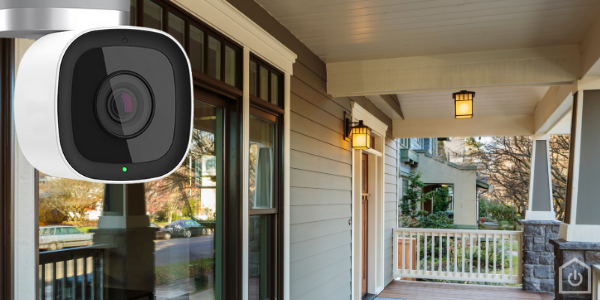
  • Cameras: Outdoor cameras can deter burglars and provide valuable footage in the event of a break-in.
  • Outdoor sensors: These sensors can detect motion and trigger an alarm or notification.
  • Speakers to warn thieves: Some security systems include speakers that can be used to alert thieves that they have been detected.
  • Signs in the yard: Signs advertising your security system can also deter burglars.

Precautions

  • Better locks: Upgrade your locks to deadbolts and consider adding a security bar to your door.
  • Armored door frame: An armored door frame can help to prevent burglars from kicking in your door.
  • Metal doors: Metal doors are more challenging to break down than wooden doors.
  • Monitored security: Having monitored security systems can provide peace of mind, knowing that your home is being continuously monitored 24/7. Some insurance companies may also offer homeowners insurance discounts if you have a monitored security system in place.

Once you have considered these factors, you can begin shopping for a home security system. With numerous systems available on the market, it is essential to conduct thorough research and select one that suits your specific needs. The best part is that today’s Smart Home Alarm Systems can also work with existing alarm systems, making the process more time-efficient.  

However, a more effective move would be to bring in the experts. Let Move Concierge secure your home for you. Our team can customize the perfect home security system tailored to your home and your needs. Every situation is different, and we are aligned with some of the largest security providers in the nation, enabling us to deliver high-quality security solutions at the most competitive cost. Need door and window motion sensors? We got you covered. Want to add a smart thermostat and indoor cameras to control everything from your smartphone? Consider it DONE. 

Move Concierge doesn’t just set you up in your new home. We keep you safe and secure so you can sleep well at night. 24/7. Our security services never sleep. We are your safest bet for security.

What Happens To Spiders In The Winter?

Unlike many other pests, spiders don’t become less active in the winter. In fact, many property owners start to notice spiders in their homes more and more during colder months. But how is this possible for such small, cold-blooded creatures? By learning how spiders survive the winter, you’ll learn why they can be a big problem for you during this time of the year.

(more…)

Traditional TV vs. Streaming TV

With more than 270 streaming services on the market, many homeowners are tempted to cut the cord for good and ditch their traditional cable or satellite TV services. But what’s the better deal? Is going all-in on streaming cheaper? Does it offer the same content?

(more…)

How To Protect Yourself and Family From Pet Allergies

pet allergies - utility concierge

According to the American Academy of Allergy, Asthma, and Immunology statistics, nearly 62% of American households have pets, including over 1.5 million cats and dogs. With more than 50 million Americans experiencing various allergies annually, many people may suffer from pet allergies. Symptoms of pet allergies include wheezing and sneezing, a stuffy nose and runny eyes, itchy throat, and nasal congestion of varying degrees from mild to severe.

(more…)

Halloween Homeowner Safety Tips

Safety is a hot topic around Halloween with tips like checking your child’s candy for signs of tampering and adding a glow stick to their costume to make sure they can be seen. 

Unfortunately, trick-or-treaters aren’t the only ones out and about on Halloween night. Criminals too take advantage of the opportunity to freely roam neighborhood streets looking for their own treats – easy targets. 

Property crime rates spike by an average of 24 percent each Halloween, according to a study by Travelers Insurance. The majority of insurance claims were for theft, with 60 percent occurring at the home and 21 percent offsite, the remaining 19 percent of claims are for vandalism. 

Keep your home safe from vandalism and theft this Halloween. Taking just a few precautions will make your home less appealing to criminals looking for an easy score. 

Halloween Homeowner Safety Tip 1: Keep the exterior lights on

Keep the lights on

Take advantage of human nature to protect your home. People are far less likely to commit a crime if they can easily be seen doing so. Keep the exterior of your home well lit to eliminate the opportunity for anyone to sneak around. 

Pay special attention to lighting around the front and back doors, and any other access points or areas people shouldn’t be lurking. Motion-sensitive lights are great for these spots if you don’t want to keep lights on all night.

Halloween Homeowner Safety Tip 1: Install a Security System

Install a Security System 

The mere presence of a security system can be enough to deter a criminal from choosing your home. Most burglars take alarms and outdoor cameras into account when choosing a potential target. According to a survey of hundreds of inmates convicted of burglary, 83 percent said they would try to determine if an alarm was present before attempting a burglary. 

If it’s not seen beforehand, a security system can stop a crime in progress if your house is broken into. Half of offenders surveyed said they would discontinue the attempt if they discovered an alarm while attempting a burglary. 

Halloween Homeowner Safety Tip 1:  Use Smart Security Cameras

Use smart cameras to detect lurkers

The latest in smart home technology takes security to the next level. New outdoor cameras use AI to determine and deter threats. These smart cameras can differentiate between people and animals, only alerting you when an actual threat is detected. 

If someone is snooping around your home, the AI will recognize them as a lurker. If they are in camera view for too long, the camera will beep alerting the criminal they are being watched. Two-way voice also lets you communicate with the individual to ask what they want or scare them away. 

Advanced night-vision technology means your security cameras have a clear picture and your home is protected all night long., even on Halloween. 

Speak with a security expert to learn more about protecting your home with the latest smart home technology.